So, you're ready to embark on the adventure that is Disney. That itself is a feat, but you also have a family member with sensory or accessibility needs. Where do you even begin? Regardless of whether you're local and just going for the day or this is a full vacation, there are some things that could help you plan and make your visit smoother. Let us give you what we've learned from taking our nonverbal autistic daughter over the last eight years.
1. Before You Go: Planning Ahead
What some people don't realize is that what you do before your trip is just as important as what you do while on it.
First things first: create a login for Disney. If you have Disney+, Hulu, or ESPN, great news, you already have one. Personally, I would log in on the Walt Disney World website to set up your profile. This is where you set up your friends and family (those going with you), and you can link your reservations and tickets. We personally like having a login for each of us, Jeff and myself, with Viola under my account (a minor cannot have their own). We link our accounts as "Friends" so we can share plans and plan for each other when necessary. This can also be done on the app; I just find it slightly easier on the website. No matter how you set up your account, you'll need to download the My Disney Experience app for use while in the park.
Disney offers Disability Access Service (DAS) for guests who, due to a developmental disability such as autism or similar, cannot wait in a conventional queue for an extended period. Read our guide to DAS and review Disney's official information before your visit.
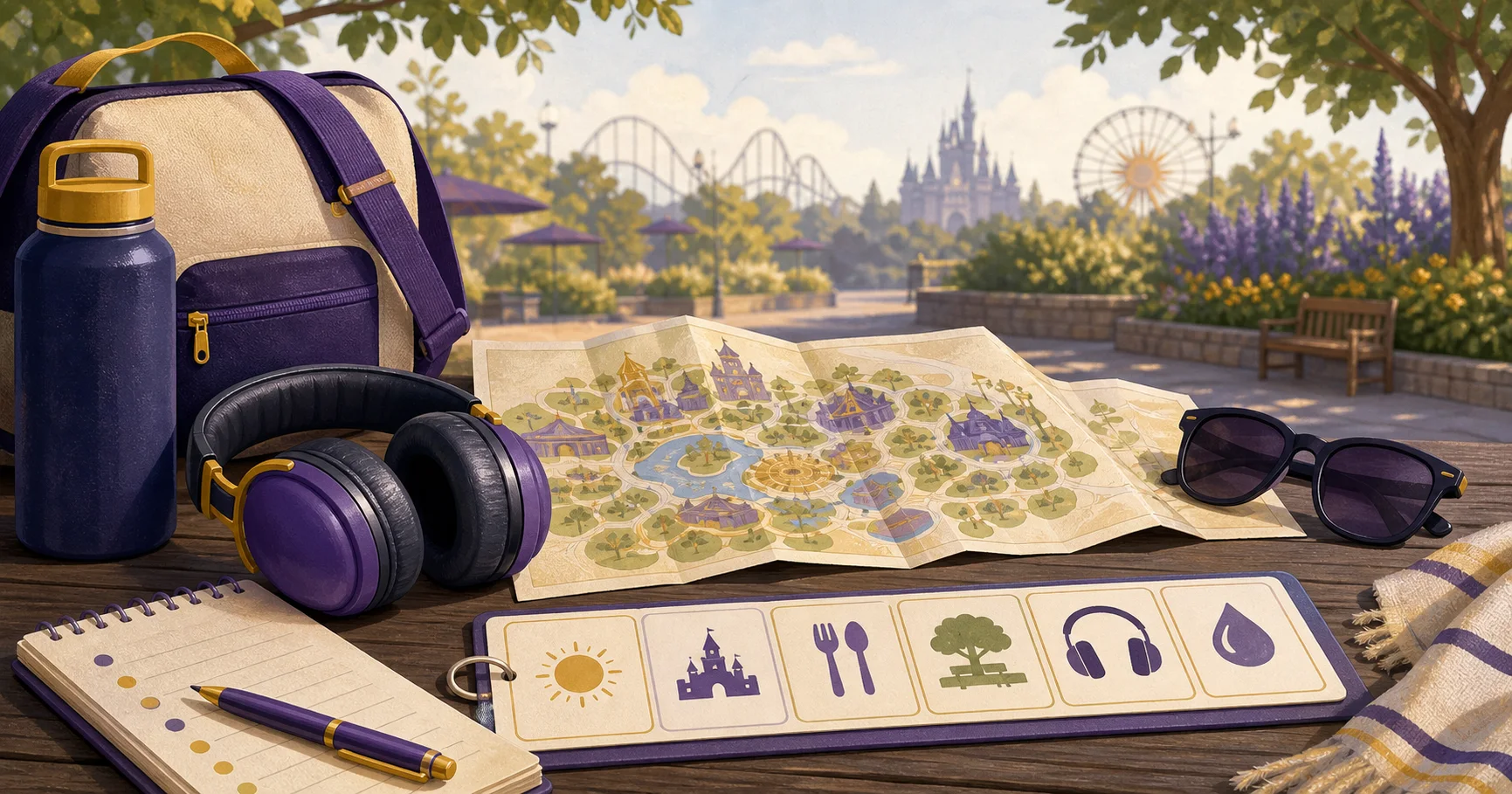
Depending on your needs or the needs of your child, it may be helpful to watch ride-through videos. This can help you decide which rides would be good for your party and which rides or shows may need to be skipped. This especially helps if you have someone who doesn't like surprises and needs to know what to expect. It also gets everyone involved in the planning.
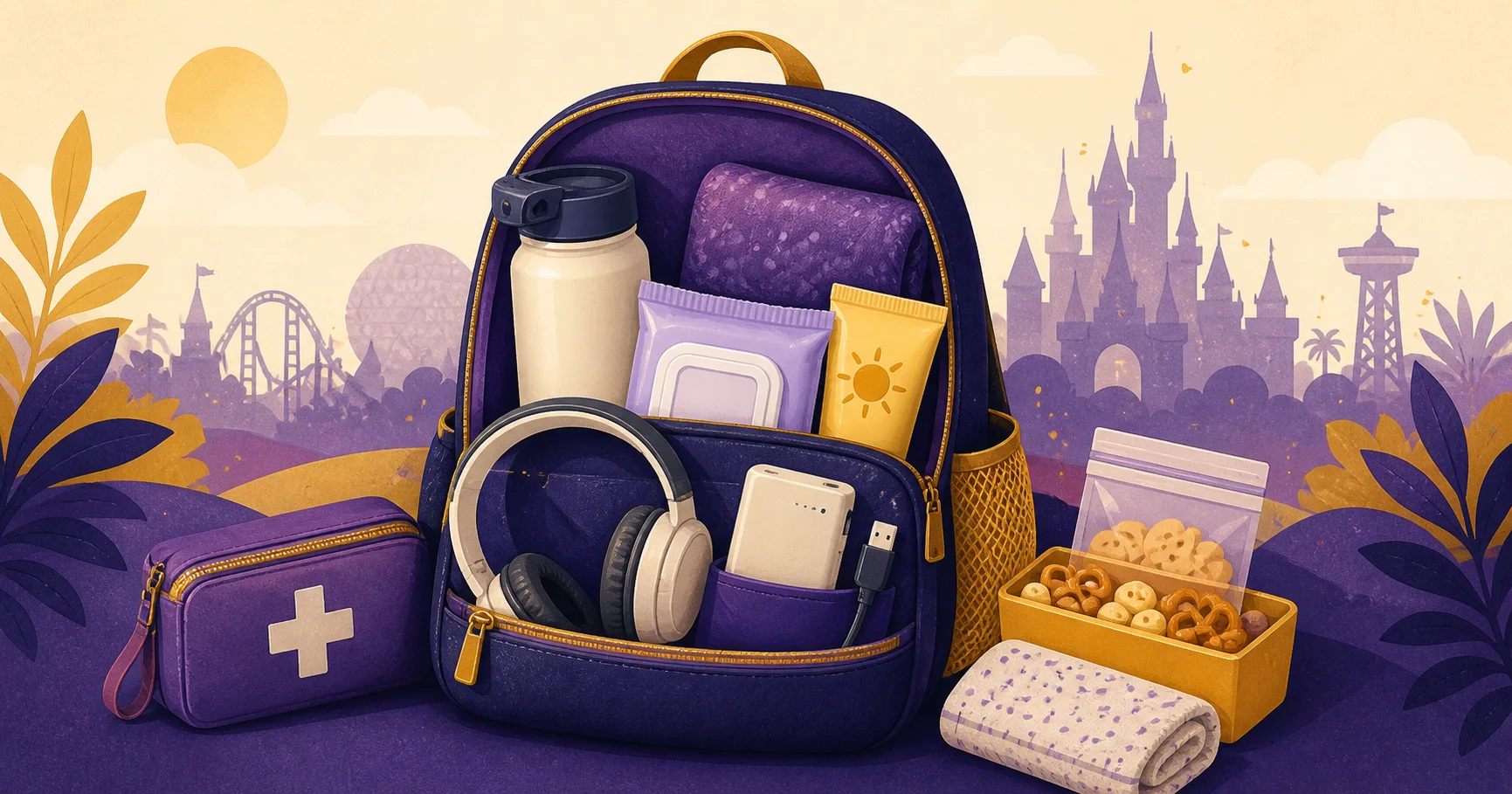
Finally, make sure you pack accordingly. For families with additional support needs, it is not always as simple as making sure you have clothes and toiletries. Do you need noise-canceling headphones? Fidget toys? Comfort items? Safe foods for snacks? That special water bottle that is the only one they'll drink out of? I also recommend baby wipes or wet wipes regardless of whether your child is potty trained. You never know when you may need one for a spill or something sticky on fingers.
Also, think about a stroller, even if your child is "too old." There is a lot more walking around Disney than most people do on an everyday basis. For us, it became a safe place for Viola when she got overwhelmed. A place she could relax, use her tablet, and shut out the outside noise until she was ready.
Don't forget to pack an extra set of clothes in your park bag. You never know when you'll get caught in a Florida rainstorm or your child overheats, and the sensory experience of being stuck in wet or sweaty clothes can be too much. A quick change can be the difference between pushing through and having to call it a day.
2. Picking the Right Park & Day
Picking the right park can be difficult. This really depends on a lot of different factors. Is this a day trip or a full vacation? Are you local or traveling in? Staying at a Disney resort or off property?
In our opinion, Animal Kingdom is the least overwhelming park, while Magic Kingdom is the most. Epcot and Hollywood Studios are a lot more dependent on what you want to accomplish. Star Wars: Galaxy's Edge is a big draw for Hollywood Studios, while Epcot festivals and concerts can draw big crowds into World Showcase.
Across Disney property, if you can go during the week, the parks are a little calmer. If crowds are a concern, avoid peak times if at all possible. It doesn't matter what day it is during school breaks: summer, Thanksgiving, Christmas, Spring Break, and Easter. You may also want to check for runDisney events, especially if you need to visit on a weekend.
Along with deciding which park and what day, think about what time you want to arrive. Rope drop can be beneficial for getting quite a few things done before the full crowd arrives, but it can also be overwhelming with the lines going through security, ticket scanning, and just being in the holding area before you can enter the rest of the park. Getting there just after park open but still in the morning lets you beat the afternoon crowds without dealing with the rope drop rush.
Wanting to watch the 3 p.m. parade at Magic Kingdom but worried about exhaustion and finding a good spot? Start a little later in the morning so it's more relaxed. The parade starts in Frontierland. Sometimes there are fewer crowds in Frontierland and Liberty Square to watch, and you get the opening of the parade. If you find a great spot on Main Street, wonderful, just be prepared that the parade won't reach you until around 3:15 to 3:20.
Want to watch the fireworks or nighttime show? Plan ahead. Start your day later or take a break midday.
3. Navigating Sensory Overload
Kids get overwhelmed at home, so how do you navigate somewhere with as much sensory stimulation as Disney World?
First, keep in mind your child's triggers. Can they handle loud noises, flashing lights, the heat, being in a crowd? If we prepare for these triggers with noise-canceling headphones, a stroller or wheelchair so they're in their own space, cool rags, water bottles, and clip-on fans, that can help keep our children regulated.
Sometimes, no matter what you do, you can't prevent meltdowns and sensory overloads. So what can you do while in the park to help? Find a quiet spot. Find air conditioning. There are places throughout all the parks where you can decompress.
Also, be aware of where the Baby Care Centers are. Each park has one, and if you're nearby, they can be a lifesaver: an air-conditioned space with changing tables, nursing and pumping areas, and usually a small area with tables and chairs for a quiet snack. They have a microwave, sink, and restrooms. These centers also sell a few items like baby food, diapers, wipes, and sunscreen in case you run out or forgot something.
Finally, sometimes the only thing you can do is leave the park and take a break. Go back to your resort, sit in the quiet of your car, take a nap, go to the pool. It is okay to not spend 12 to 14 hours in the park.
4. Food & Dining
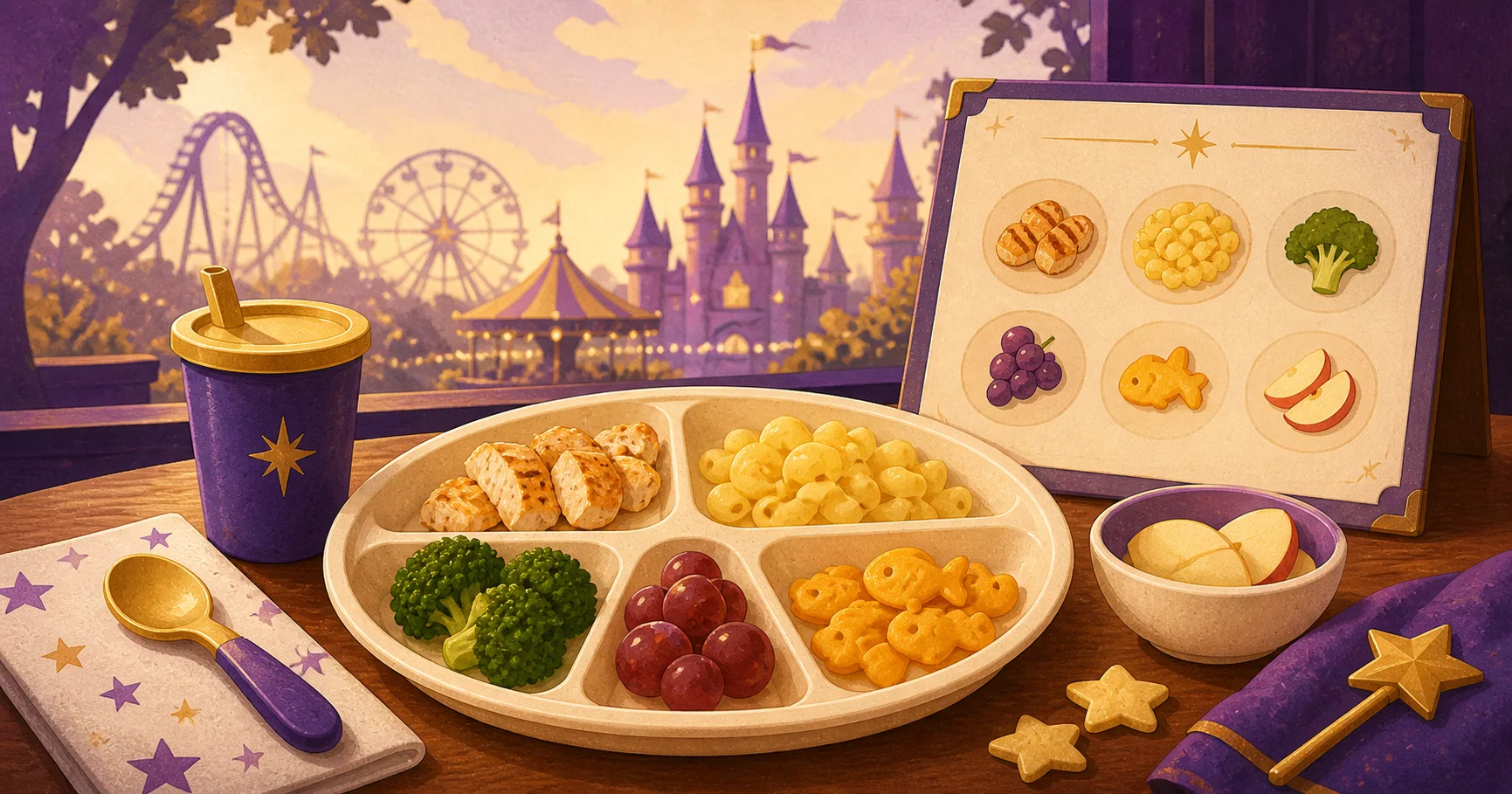
Our daughter is an extremely picky eater, so making sure she has food to get through the day is so important. Disney is amazing in that you can bring food and drinks into the parks, just no glass or alcohol. If you need ice, make sure it isn't loose; use an ice pack or keep ice in a sealed bag.
Bring the safe foods.
Mobile ordering through the app is a lifesaver as well. It cuts your wait time at quick-service restaurants significantly.
For us, we love enjoying table-service meals, but we have to be picky about which ones. Buffets and family-style dining aren't a great option for us since Viola won't eat most of what's offered, so we save those for special occasions knowing we're paying for the experience (usually character meals). But we also don't overload on table service. It takes time, and Viola is go, go, go.
If you have a popcorn-loving person in your family, get the popcorn bucket. It's a staple whenever we go to the park. The money saved with the price of refills paid for our bucket in two days.
5. The Unexpected Wins
Be ready for the unexpected. I don't mean the bad unexpected. The unexpected that melts your heart.
Viola wanting to visit Mickey and blowing a kiss. Wanting to twirl with Minnie. Those are the moments we treasure. The characters taking their time to connect with her even when she can't speak. A ride that becomes a favorite even though there's a lot going on.
And when you get home, when they find the POV of their favorite ride or show on their tablet so they can watch it again, you know you've given them memories.
The Magic Is Worth It
It may not be perfect. It probably won't be. Some days you'll leave early. But the magic is real, and your child deserves to experience it on their terms.